

A bathroom vanity is one of the most important features in any bathroom remodel. It affects how the bathroom looks, how much storage you have, how easy the space is to use, and how comfortable your daily routine feels.
The right vanity can make a small bathroom feel more organized, a primary bathroom feel more luxurious, and a guest bathroom feel more polished. The wrong vanity, however, can create spacing issues, poor storage, awkward plumbing problems, and a design that does not match the rest of the room.
At Capital Kitchen & Bath, we help homeowners choose bathroom vanities that fit their space, lifestyle, and remodeling goals. This guide explains how to choose the right vanity for a bathroom remodel and what to consider before making your final decision.
Why the Bathroom Vanity Matters
Homeowners should Choose the Right Vanity to improve bathroom storage, comfort, organization, and overall remodeling functionality.
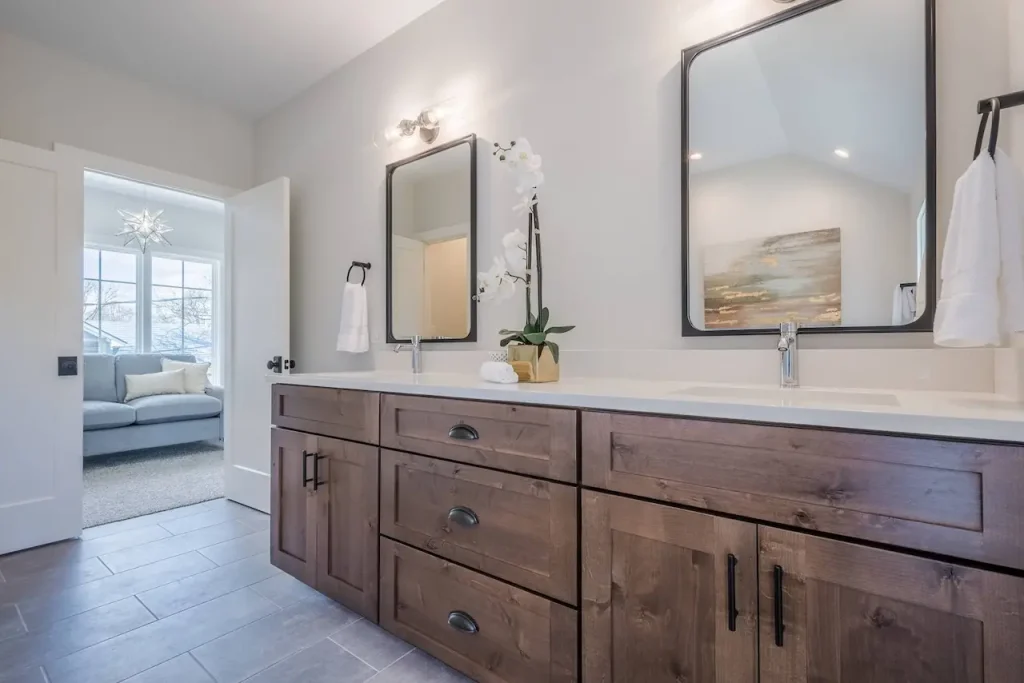
Homeowners planning to choose the right vanity for a bathroom remodel should focus on storage, layout, countertop materials, and long-term bathroom functionality.
A vanity is more than a cabinet with a sink. It is a major part of your bathroom layout and daily function. It gives you a place to wash up, store personal items, organize cleaning products, and set the overall design tone of the bathroom.
A good bathroom vanity should:
- Fit the size of the bathroom
- Provide enough storage
- Match your design style
- Work with your plumbing layout
- Leave enough walking space
- Support the right countertop and sink
- Be durable in a high-moisture space
Because the vanity connects design, storage, and plumbing, it should be planned early in the bathroom remodeling process.
Measure Your Bathroom First
Before choosing a vanity style, measure your bathroom carefully. Size is one of the most important factors because a vanity that is too large can make the bathroom feel cramped. A vanity that is too small may not provide enough counter space or storage.
Measure:
- Width of the available wall space
- Depth from the wall into the room
- Height preference
- Door swing clearance
- Shower or tub clearance
- Toilet clearance
- Walking space around the vanity
For smaller bathrooms, a compact vanity or floating vanity may work better. For larger primary bathrooms, a double vanity may provide more comfort and convenience.
Choose the Right Vanity Size
Many homeowners research how to Choose the Right Vanity for their bathroom layout, storage needs, and renovation goal
Many homeowners researching how to choose the right vanity for a bathroom remodel compare vanity sizes, sink layouts, and storage options before starting construction.
Bathroom vanities come in many widths, usually ranging from small 24-inch vanities to larger 72-inch double vanities. The best size depends on the bathroom layout and how many people use the space.
| Vanity Size | Best For |
| 24 inches | Powder rooms or very small bathrooms |
| 30 to 36 inches | Small to medium bathrooms |
| 42 to 48 inches | Guest bathrooms or larger single-sink layouts |
| 60 inches | Double-sink primary bathrooms |
| 72 inches or more | Large primary bathrooms with extra storage needs |
A single vanity is usually enough for a guest bathroom or hallway bathroom. A double vanity is helpful in a primary bathroom where two people need to use the space at the same time.
Think About Storage Needs
Storage is one of the main reasons homeowners upgrade their bathroom vanity during a remodel. Before choosing a vanity, think about what you need to store.
Common bathroom storage needs include:
- Towels
- Hair tools
- Skincare products
- Cleaning supplies
- Extra soap and toiletries
- Makeup and grooming items
- Toilet paper
- First aid items
If you need more organized storage, choose a vanity with drawers instead of only cabinet doors. Drawers make it easier to separate smaller items and avoid clutter. Cabinet doors can be useful for larger products or plumbing access, but they may not be as organized without shelves or bins.
Decide Between Single Sink and Double Sink
One of the biggest vanity decisions is whether to choose a single sink or double sink.
A single-sink vanity gives you more counter space and storage. It is often better for smaller bathrooms, guest bathrooms, and homeowners who do not need two sinks.
A double-sink vanity is better for shared bathrooms, especially primary bathrooms. It allows two people to use the vanity at the same time. However, double sinks take up more counter and cabinet space, so they work best in larger bathrooms.
If your bathroom is not wide enough, forcing a double vanity can make the space feel tight. In that case, a larger single vanity may be more practical.
Choose the Right Vanity Style
Professional remodelers help homeowners Choose the Right Vanity style based on bathroom size, countertop space, and modern design preferences.
Learning how to choose the right vanity for a bathroom remodel can improve bathroom organization, comfort, storage, and long-term home value.
Your vanity should match the overall look of your bathroom remodel. The style you choose can make the bathroom feel modern, traditional, transitional, farmhouse, or luxury.
Popular vanity styles include:
Freestanding vanity:
This is the most common vanity style. It sits on the floor and usually offers good storage. It works well in many bathroom designs.
Floating vanity:
A floating vanity is mounted to the wall and does not touch the floor. It creates a clean, modern look and can make a small bathroom feel more open.
Furniture-style vanity:
This vanity looks more like a piece of furniture. It may have legs, detailed cabinet doors, or a more decorative finish.
Built-in vanity:
A built-in vanity is designed to fit the space exactly. It is a good option for custom bathroom remodels where storage and layout need to be carefully planned.
Select a Durable Vanity Material
Bathrooms are high-moisture areas, so vanity materials need to handle humidity, splashes, and daily use. Choosing cheap or poorly made materials can lead to swelling, peeling, or early damage.
Common vanity cabinet materials include:
- Solid wood
- Plywood
- MDF with moisture-resistant finish
- Engineered wood
- Laminate finishes
Solid wood and plywood are strong options, but they still need proper sealing and finishing. MDF can work well when it is designed for bathroom use and protected with a quality finish. Avoid materials that are not made for moisture-prone areas.
Pick the Right Countertop
The vanity countertop affects both appearance and maintenance. It should be durable, water-resistant, and easy to clean.
Popular bathroom vanity countertop options include:
| Countertop Material | Benefits |
| Quartz | Durable, low maintenance, modern look |
| Granite | Natural stone look, strong, long-lasting |
| Marble | Elegant and luxury appearance |
| Solid surface | Smooth, simple, easy to maintain |
| Cultured marble | Budget-friendly and practical |
Quartz is one of the most popular choices because it is durable, attractive, and easier to maintain than many natural stone options. Marble looks beautiful, but it may require more care to prevent staining or etching.
Many homeowners Choose the Right Vanity based on bathroom layout, storage space, sink design, and long-term remodeling functionality.
Choose the Right Sink Type
The sink style affects the vanity’s appearance and usable counter space.
Common sink types include:
Undermount sink:
Installed below the countertop. It creates a clean look and makes cleaning easier.
Drop-in sink:
Installed into a cutout in the countertop with the rim sitting on top. It is practical and often budget-friendly.
Vessel sink:
Sits on top of the countertop. It creates a bold design look but may require careful height planning.
Integrated sink:
Built into the countertop as one piece. It is easy to clean and works well in modern bathrooms.
For most bathroom remodels, undermount sinks are a strong choice because they look clean and are easy to maintain.
Consider Faucet Placement
Your vanity, countertop, and sink must work with the faucet style. Some faucets are mounted on the countertop, while others are mounted on the wall.
Before choosing a vanity, confirm:
- Number of faucet holes
- Faucet height
- Sink depth
- Countertop thickness
- Plumbing location
- Mirror and backsplash clearance
Wall-mounted faucets can look modern and save counter space, but they may require more plumbing work. Standard countertop faucets are usually simpler to install.
Match the Vanity to Your Bathroom Layout
A vanity should improve the bathroom layout, not make it harder to use. Make sure it does not block doors, drawers, shower entries, or walking space.
In tight bathrooms, a vanity with rounded edges, a narrower depth, or wall-mounted design can help save space. In larger bathrooms, a wider vanity with more drawers can improve comfort and organization.
Also consider the placement of lighting and mirrors. The vanity area should have good lighting for daily tasks like shaving, applying makeup, and getting ready.
Think About Cleaning and Maintenance
Some vanities look beautiful but require more maintenance. For busy households, choose materials and finishes that are easy to clean.
A vanity with fewer grooves, simple cabinet fronts, and a durable countertop will usually be easier to maintain. Floating vanities can make floor cleaning easier because the space underneath is open.
Light-colored countertops may show stains less, while dark surfaces may show water spots or dust more easily. Always choose a finish that fits your daily routine.
Choose a Vanity That Fits Your Long-Term Needs
A bathroom remodel should not only look good today. It should continue working well for years.
Think about future needs such as:
- More storage
- Easier access
- Better lighting
- Aging-in-place comfort
- Family use
- Resale appeal
- Low-maintenance materials
For example, if you plan to stay in your home long-term, a comfortable vanity height, good drawer storage, and easy-clean materials may matter more than trendy design details.
Common Bathroom Vanity Mistakes to Avoid
Many vanity problems happen when homeowners choose based on looks only. To avoid remodeling regrets, watch out for these common mistakes:
- Choosing a vanity that is too large
- Not measuring door and drawer clearance
- Ignoring plumbing location
- Choosing poor-quality cabinet materials
- Not planning enough storage
- Picking a countertop that requires too much maintenance
- Forgetting proper lighting and mirror placement
- Choosing style over function
A vanity should look good, but it also needs to work well every day.
Learning how to Choose the Right Vanity can improve bathroom appearance, functionality, and long-term home value.
Homeowners who Choose the Right Vanity carefully can improve bathroom storage, remodeling functionality, comfort, and long-term design appeal.
Final Recommendation
The best bathroom vanity is the one that fits your bathroom size, storage needs, design style, and daily routine. For small bathrooms, a compact or floating vanity may be the best choice. For primary bathrooms, a larger vanity with drawers, durable countertops, and double sinks may provide better function.
If you want a clean, long-lasting result, focus on proper sizing, moisture-resistant materials, smart storage, and professional installation.
Planning a Bathroom Remodel?
Capital Kitchen & Bath helps homeowners design bathrooms that are beautiful, practical, and built for everyday use. Whether you need a new vanity, updated flooring, a walk-in shower, or a complete bathroom remodel, our team can help you choose the right materials and layout for your home.
Schedule a consultation with Capital Kitchen & Bath to start planning a bathroom remodel that fits your space, style, and budget.
FAQs
What size vanity is best for a bathroom remodel?
The best vanity size depends on your bathroom layout. Small bathrooms may need a 24-inch to 36-inch vanity, while larger primary bathrooms can often support a 60-inch or 72-inch vanity. Always measure the space before choosing.
Is a single vanity or double vanity better?
A single vanity is better for small bathrooms, guest bathrooms, and spaces where counter space is more important. A double vanity is better for shared primary bathrooms where two people use the space at the same time.Many modern bathroom renovation projects focus on helping homeowners Choose the Right Vanity for better storage and bathroom organization.
What is the best material for a bathroom vanity?
Solid wood, plywood, and moisture-resistant engineered materials are good options for bathroom vanities. The best choice depends on budget, style, and how much moisture the bathroom receives.
What countertop is best for a bathroom vanity?
Quartz is one of the best bathroom vanity countertop options because it is durable, attractive, and low maintenance. Granite and solid surface countertops are also strong choices.
Are floating vanities good for small bathrooms?
Yes, floating vanities are a good choice for small bathrooms because they create more visible floor space and make the room feel more open. They also give the bathroom a clean, modern look.
How much storage should a bathroom vanity have?
A bathroom vanity should have enough storage for daily items such as toiletries, towels, hair tools, cleaning supplies, and personal care products. Drawers are usually better for organizing small items.
Should the vanity match the bathroom cabinets?
The vanity does not need to match everything exactly, but it should coordinate with the overall bathroom design. Cabinet color, countertop, hardware, flooring, and tile should feel balanced together.