

One of the first questions homeowners ask before starting a kitchen renovation is simple: How long does a kitchen remodel take? In Virginia, timelines vary based on kitchen size, design complexity, and material choices, but most projects follow a predictable process.
This guide explains the full kitchen remodel timeline in Virginia, from planning to final walkthrough, using real remodeling workflows followed by Capital Kitchen & Bath. It helps homeowners set realistic expectations and avoid common delays.
Average Kitchen Remodel Timeline in Virginia
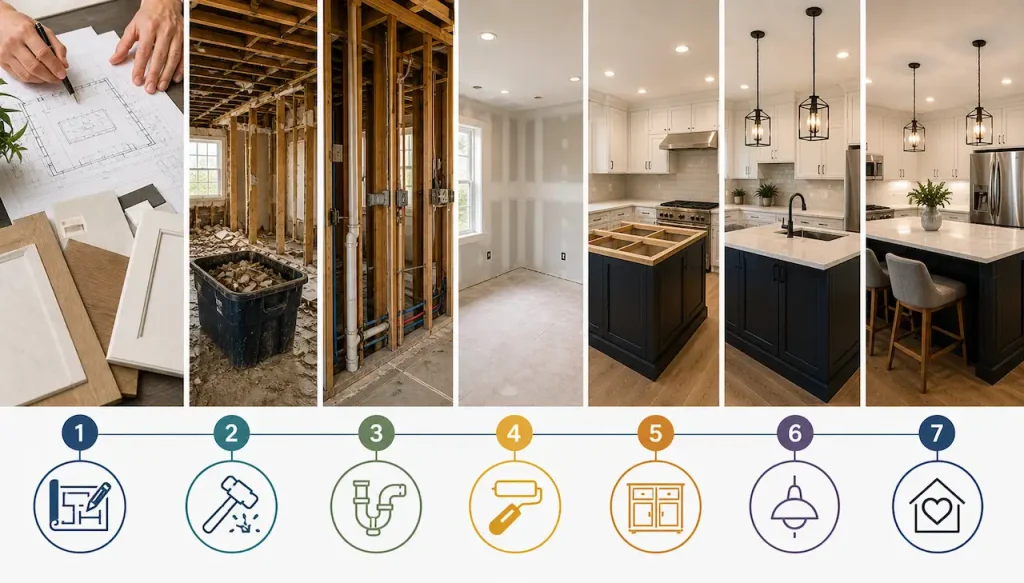
Most kitchen remodeling projects in Virginia are completed within six to eight weeks once construction begins. However, the full process—from planning to completion—often spans a longer period.
Typical Time Range
- Simple remodel: 4–6 weeks
- Mid-range remodel: 6–8 weeks
- Complex or custom remodel: 8–12 weeks
Understanding each phase helps explain why timelines differ.
Phase 1: Planning and Design (1–2 Weeks)
The planning stage sets the foundation for the entire remodel. Skipping or rushing this phase often leads to delays later.
During this phase:
- The kitchen layout is reviewed and improved
- Storage, workflow, and lighting needs are identified
- Design preferences and budget goals are confirmed
- Measurements are taken for accurate planning
Professional kitchen remodeling services focus heavily on this phase to reduce surprises during construction.
Phase 2: Material Selection and Ordering (2–4 Weeks)
Once the design is approved, materials are selected and ordered. This phase often overlaps with planning but plays a major role in overall timing.
Materials ordered during this stage include:
- Cabinets and hardware
- Countertops
- Flooring
- Fixtures and lighting
- Appliances, if included in the scope
Cabinet lead times are often the longest factor in a kitchen remodel timeline. Early decisions help keep the project on schedule.
Phase 3: Pre-Construction Preparation (3–5 Days)
Before installation begins, the space is prepared for construction.
This phase includes:
- Protecting nearby rooms
- Setting up temporary work areas
- Coordinating deliveries
- Final scheduling of trades
Clear preparation reduces disruption and helps work move efficiently once demolition starts.
Phase 4: Demolition (3–5 Days)
Demolition removes existing cabinets, countertops, flooring, and fixtures.
During demolition:
- Old materials are removed safely
- Plumbing and electrical access points are exposed
- Structural conditions are evaluated
This phase often reveals issues such as outdated wiring or plumbing, which may slightly affect the timeline if updates are required.
Phase 5: Rough-In Work (1–2 Weeks)
Rough-in work prepares the kitchen for new installations.
This includes:
- Electrical upgrades for lighting and appliances
- Plumbing adjustments for sinks and dishwashers
- HVAC or ventilation improvements, if needed
This phase is critical for safety and code compliance in Virginia homes.
Phase 6: Cabinet Installation (1–2 Weeks)
Cabinet installation defines the kitchen’s layout and storage.
During this phase:
- Base and wall cabinets are installed
- Alignment and spacing are checked
- Hardware preparation is completed
Proper cabinet installation ensures countertops and appliances fit correctly later in the process.
Phase 7: Countertops, Flooring, and Finishes (1–2 Weeks)
Once cabinets are in place, finishing elements are installed.
This phase includes:
- Countertop templating and installation
- Flooring installation
- Backsplash tile work
- Painting and trim
Countertop fabrication may add several days depending on material type.
Phase 8: Final Installation and Walkthrough (2–4 Days)
The final phase brings the kitchen together.
This includes:
- Appliance installation
- Fixture and lighting installation
- Final adjustments and cleanup
- Walkthrough to confirm quality and functionality
Homeowners can review completed kitchens and real project results through the recent kitchen remodeling projects portfolio, which shows how timelines translate into finished spaces.
What Can Delay a Kitchen Remodel in Virginia?
Even well-planned projects can face delays. Common causes include:
- Late material selections
- Backordered cabinets or appliances
- Unexpected electrical or plumbing upgrades
- Design changes during construction
Clear planning and early decisions help prevent these issues.
Can You Live at Home During a Kitchen Remodel?
Most homeowners remain in their homes during a kitchen remodel. Temporary arrangements are often recommended, such as:
- Setting up a small cooking area
- Planning meals ahead
- Understanding daily work schedules
Knowing the timeline in advance helps reduce stress during construction.
Frequently Asked Questions About Kitchen Remodel Timelines
Is six weeks realistic for a kitchen remodel?
Yes, for many mid-range projects with good planning and material availability.
Does changing the kitchen layout increase the timeline?
Yes. Layout changes often require additional plumbing and electrical work.
What is the biggest factor affecting remodel time?
Cabinet lead times and design decisions have the largest impact.
Plan Your Kitchen Remodel in Virginia with Confidence
Understanding the full kitchen remodel timeline helps homeowners plan better and avoid frustration. Clear design decisions, early material selection, and experienced project management keep the process efficient.If you are planning a kitchen remodel, start by requesting a consultation through the contact page for Capital Kitchen & Bath to discuss your goals, timeline, and next steps.