

Quartz and granite are two of the most popular countertop choices for kitchen remodeling. Both can look beautiful, both can last for many years, and both can improve the overall value and function of your kitchen. But they are not the same.
Choosing between quartz vs granite countertops can greatly impact your kitchen remodel results.
For most homeowners, quartz is better if you want a low maintenance, consistent, modern countertop that resists stains well. Granite is better if you want a natural stone surface with unique patterns, strong heat resistance, and one of a kind character.
The right choice depends on your lifestyle, budget, design style, cooking habits, and how much maintenance you are willing to do. For a busy family kitchen in Chesapeake or Hampton Roads, this decision should be based on more than appearance. You also need to think about cleaning, durability, heat, stains, seams, resale appeal, and long term use.
Quick Comparison: Quartz vs Granite Countertops
| Feature | Quartz Countertops | Granite Countertops |
| Material Type | Engineered stone | Natural stone |
| Appearance | More consistent patterns | Unique natural patterns |
| Maintenance | Lower maintenance | Needs periodic sealing |
| Stain Resistance | Strong stain resistance | Good if properly sealed |
| Heat Resistance | Good, but hot pans can damage it | Stronger heat resistance |
| Scratch Resistance | Very strong | Very strong |
| Sealing Needed | No | Usually yes |
| Best For | Busy kitchens, modern styles, easy cleaning | Natural stone look, heat resistance, unique design |
| Main Concern | Less heat resistant than granite | More maintenance than quartz |
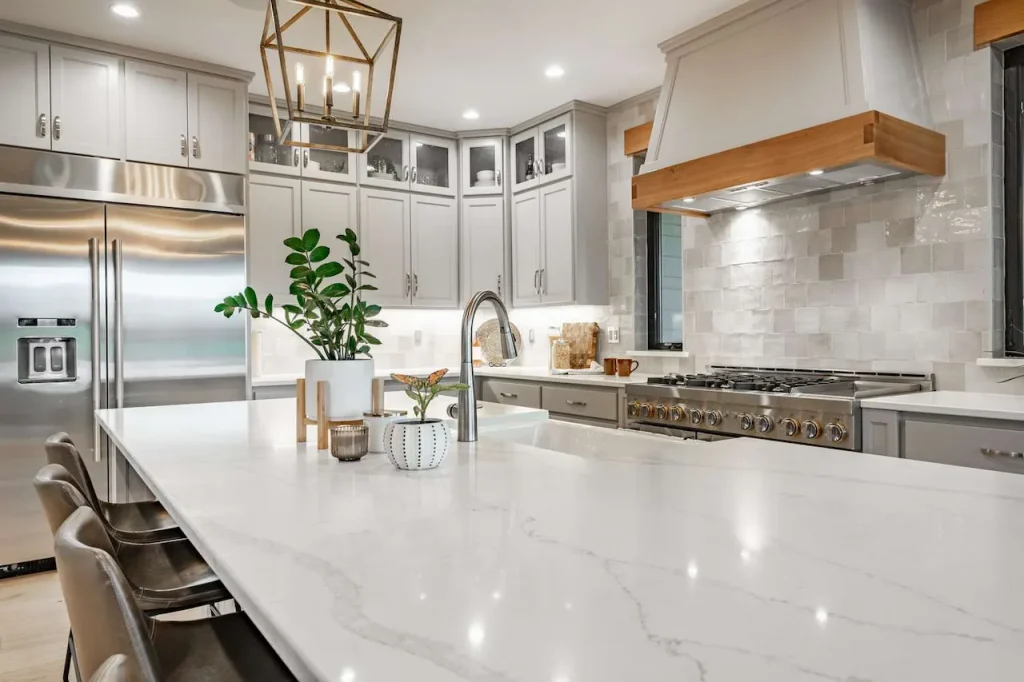
What Are Quartz Countertops?
Quartz countertops are engineered stone surfaces. They are made from natural quartz particles mixed with resins, pigments, and binders. This creates a strong, non porous surface that can look like natural stone while offering more consistent color and pattern options.
Because quartz is engineered, homeowners can choose from many colors and designs. Some quartz countertops look clean and minimal. Others are designed to look like marble, granite, or stone with soft veining.
Quartz has become very popular in modern kitchen remodeling because it is durable, easy to clean, and does not require sealing. Consumer Reports’ countertop buying guidance notes that quartz is one of the countertop materials to consider and highlights that granite needs periodic sealing for stain protection.
What Are Granite Countertops?
Granite is a natural stone cut from slabs. Each slab has its own color, mineral pattern, movement, and variation. This is one of the biggest reasons homeowners choose granite. No two slabs are exactly the same.
Granite can create a warm, rich, and natural look in the kitchen. It works well in traditional, transitional, rustic, and even modern designs depending on the slab and cabinet pairing.
Granite is very durable and has strong heat resistance. However, because it is a natural stone, it is more porous than quartz and may need sealing to help protect against stains. Consumer Reports notes that most granite countertops do not need to be sealed according to the Natural Stone Institute, but sealing can improve moisture and stain resistance.
Which Countertop Looks Better?
This depends on your style.
Many homeowners compare quartz vs granite countertops based on durability, maintenance, and appearance.
Quartz is better if you want a clean, consistent, controlled look. If you want soft white surfaces, subtle veining, or a modern design that feels simple and polished, quartz is often the easier choice.
Granite is better if you want natural movement, depth, and variation. Granite can include dramatic colors, mineral flecks, waves, speckles, and patterns that cannot be perfectly copied because they come from nature.
For modern kitchens, quartz often fits very well with flat panel cabinets, simple hardware, neutral colors, and clean backsplashes. For kitchens that need warmth and natural character, granite can be a strong choice.
Recent kitchen trend reporting also shows quartz remains favored for its low maintenance and stone look, while granite and marble are becoming less dominant in newer kitchen design trends.
Which Is More Durable?
Both quartz and granite are durable countertop materials. Either one can work well in a busy kitchen when installed correctly.
Quartz is very strong and resists many everyday kitchen problems, including stains, scratches, and general wear. Because it is non porous, spills are less likely to soak into the surface.
Granite is also very strong, and it performs especially well with heat. It can handle normal kitchen use for many years, but it performs best when it is properly sealed and cared for.
A practical way to compare them is this: quartz usually wins for low maintenance stain resistance, while granite usually wins for natural heat resistance. HowStuffWorks summarizes the difference clearly: both materials are durable, but granite performs better against heat, while quartz performs better against spills.
Which Is Easier to Maintain?
Quartz is easier to maintain for most homeowners.
Because quartz is non porous, it does not need sealing. Regular cleaning with mild soap and water is usually enough for daily care. This makes quartz a strong choice for busy families, rental homes, and homeowners who want a beautiful kitchen without extra upkeep.
Granite is still manageable, but it usually needs more attention. Depending on the stone and finish, granite may need periodic sealing to help protect against stains. Consumer Reports’ buying guide notes granite needs periodic sealing for stain protection.
If you want the lowest maintenance option, quartz is usually the better choice.
Which Handles Heat Better?
Granite usually handles heat better than quartz.
Granite is natural stone and has strong heat resistance. That said, it is still smart to use trivets or hot pads to protect the finish and avoid thermal shock.
Quartz is durable, but it contains resins. Very hot pots, pans, or baking trays placed directly on quartz can cause discoloration, marks, or damage. For quartz countertops, using trivets is important.
So if you cook often and regularly place hot cookware near the stove, granite may offer more peace of mind. But with simple protection, quartz can still perform very well in most kitchens.
Which Resists Stains Better?
Quartz usually resists stains better because it is non porous.
Spills from coffee, wine, oil, sauces, juice, and cooking ingredients are less likely to absorb into quartz when cleaned promptly. This makes quartz attractive for families and active kitchens.
Granite can also resist stains well when properly sealed. But if the sealer wears down or the stone is more porous, spills can become a problem.
For homeowners who want a countertop that is forgiving and simple to clean, quartz is usually the safer choice.
Which Is Better for Scratches?
Both quartz and granite are highly scratch resistant, but neither should be treated like a cutting board.
Knives can dull on stone surfaces, and repeated cutting can damage the finish over time. Use a cutting board with both materials.
Quartz has strong scratch resistance because it is engineered for durability. Granite is also very hard and durable. For normal kitchen use, both perform well.
The bigger difference is not scratches. It is maintenance and heat.
Which Costs More?
Quartz and granite pricing can overlap. The final cost depends on the slab, brand, color, thickness, edge profile, installation, sink cutouts, backsplash, and local labor.
In many remodels, basic granite may cost less than premium quartz. But rare granite slabs can cost more than standard quartz. Premium quartz designs can also become expensive, especially if they include marble like veining, special finishes, or large islands.
Cost should be compared by actual project quote, not by material name alone.
For a kitchen remodel, countertop cost is affected by:
- Square footage
- Slab selection
- Edge detail
- Sink cutouts
- Cooktop cutouts
- Island size
- Backsplash material
- Seams
- Installation complexity
- Removal of old countertops
Which Adds More Resale Value?
Both quartz and granite can support resale value because both are considered desirable countertop materials.
Quartz may appeal more to buyers who want a newer, cleaner, low maintenance kitchen. Granite may appeal more to buyers who value natural stone and unique character.
For resale, the best choice is usually the one that fits the home style and local market. A countertop should match the cabinets, flooring, backsplash, and overall home value. An expensive countertop in a kitchen with outdated cabinets may not deliver the best return.
For many Chesapeake and Hampton Roads homeowners, a practical, durable, neutral countertop often has broader appeal than a highly personal or dramatic design.
Which Works Better With Modern Kitchen Design?
Quartz often works better with modern kitchen design because the patterns are more controlled. If you want a clean white countertop, soft veining, matte finish, waterfall island, or full height slab backsplash, quartz can be a strong option.
Granite can still work in modern kitchens, but the slab must be selected carefully. Some granite patterns feel traditional, while others look sleek and contemporary.
If your remodel goal is a clean, simple, bright, updated kitchen, quartz may be the easier design choice.
Which Works Better With Traditional Kitchen Design?
Granite often works beautifully in traditional and transitional kitchens. Its natural movement pairs well with wood cabinets, warm finishes, detailed cabinet doors, and classic design choices.
Quartz can also work in traditional kitchens, especially if you choose a warmer color or natural stone inspired pattern.
The best countertop should support the full kitchen design, not compete with it.
Which Is Better for Busy Families?
Quartz is usually better for busy families because it is easier to clean and does not require sealing.
A family kitchen deals with spills, snacks, cooking, homework, lunch prep, groceries, and daily traffic. For this kind of use, low maintenance matters.
Quartz is especially helpful if you want:
- Easy cleanup
- Strong stain resistance
- Consistent color
- Modern appearance
- No sealing schedule
- Durable daily performance
Granite can still work well for families, but it may need more care over time.
Which Is Better for Serious Home Cooks?
Granite may be better for serious home cooks who value heat resistance and natural stone performance. It can be more forgiving near hot cookware, although trivets are still recommended.
Quartz is still excellent for cooking spaces, but homeowners should be careful with very hot pans.
If you cook often, bake frequently, or use the kitchen heavily, both materials can work. The decision may come down to heat habits and maintenance preference.
Which Is Better for Rental Properties?
Quartz is usually better for rental properties because it is easier to maintain and more stain resistant.
Rental kitchens need materials that can handle frequent use from people who may not treat the home as carefully as the owner would. Since quartz does not require sealing and resists stains well, it is often a practical choice.
Granite can still work in a rental, but only if the owner is comfortable with periodic maintenance and chooses a durable, forgiving slab pattern.
Quartz Countertops: Pros and Cons
Pros of Quartz
Quartz is popular because it offers a strong balance of beauty and practicality.
Key benefits include:
- Low maintenance
- No sealing required
- Strong stain resistance
- Consistent patterns
- Many color choices
- Works well in modern kitchens
- Easy daily cleaning
- Strong durability
Cons of Quartz
Quartz is not perfect.
Possible drawbacks include:
- Less heat resistant than granite
- Can look less natural than real stone
- Premium styles can be expensive
- Direct sunlight may affect some products over time
- Not ideal for outdoor kitchens unless approved by manufacturer
For most indoor kitchens, quartz is still one of the most practical countertop choices.
Granite Countertops: Pros and Cons
Pros of Granite
Granite remains popular because of its natural beauty and strength.
Key benefits include:
- Natural stone appearance
- Unique slab patterns
- Strong heat resistance
- Durable surface
- Long lifespan
- Works with many design styles
- Can add high end character
Cons of Granite
Granite also has a few concerns.
Possible drawbacks include:
- May need sealing
- More variation between slabs
- Can stain if not protected
- Natural patterns may not be consistent
- Some slabs can be expensive
- Seams may be more noticeable depending on pattern
Granite is a great choice for homeowners who love natural stone and do not mind some maintenance.
Best Choice by Homeowner Goal
| Homeowner Goal | Better Choice |
| Lowest maintenance | Quartz |
| Most natural look | Granite |
| Best stain resistance | Quartz |
| Best heat resistance | Granite |
| Modern white kitchen | Quartz |
| Unique stone character | Granite |
| Busy family kitchen | Quartz |
| Traditional warm kitchen | Granite |
| Rental property | Quartz |
| Serious cooking space | Granite or quartz with proper care |
Common Mistakes to Avoid
When choosing between quartz and granite, avoid these mistakes:
- Choosing only by price
- Not seeing the full slab before buying granite
- Ignoring cabinet and backsplash colors
- Forgetting edge profile costs
- Not planning for seams
- Placing hot pans directly on quartz
- Forgetting granite sealing needs
- Choosing a busy pattern for a small kitchen
- Not comparing actual installed quotes
- Picking a countertop before finalizing cabinet layout
A countertop should be selected as part of the full kitchen design.
Which Countertop Should You Choose?
Choose quartz if you want a low maintenance countertop with strong stain resistance, modern style, and consistent design. It is a great fit for busy households, small kitchens, modern remodels, and homeowners who want easy cleaning.
Choose granite if you want a natural stone countertop with unique movement, strong heat resistance, and one of a kind character. It is a great fit for homeowners who love natural materials and do not mind occasional maintenance.
There is no single winner for every home. The best countertop is the one that matches your lifestyle and remodel goals.
Why Work With Capital Kitchen & Bath?
Choosing countertops is easier when you can compare them inside a complete kitchen design plan. Cabinets, lighting, flooring, backsplash, sink style, and layout all affect how the countertop will look and perform.
Capital Kitchen & Bath helps homeowners choose kitchen remodel materials that fit their space, budget, and daily needs. Whether you prefer quartz, granite, or another surface, the right planning process can help you avoid costly mistakes and create a kitchen that works better for your home.
For homeowners in Chesapeake and the Hampton Roads area, a professional kitchen remodel should balance beauty, function, durability, and long term value.
Overall, quartz vs granite countertops each offer unique advantages depending on your lifestyle.
Conclusion
Quartz vs granite countertops is not about which material is always better. It is about which one is better for your kitchen remodel.
Quartz is usually the better choice for homeowners who want low maintenance, strong stain resistance, and a clean modern look. Granite is usually better for homeowners who want natural stone beauty, unique patterns, and stronger heat resistance.
Both materials can be excellent. The right choice depends on how you cook, how you clean, how you use your kitchen, and what style you want for your home.
Both materials can be excellent. The right choice depends on how you cook, how you clean, how you use your kitchen, and what style you want for your home.
FAQs
Is quartz better than granite for kitchen countertops?
Quartz is better for homeowners who want low maintenance, strong stain resistance, and a consistent modern look. Granite is better for homeowners who want natural stone character and stronger heat resistance.
Which is more expensive, quartz or granite?
Quartz and granite costs can overlap. Basic granite may cost less than premium quartz, but rare granite slabs can be more expensive. The final price depends on material, slab size, edge style, installation, and project complexity.
Does quartz need to be sealed?
No. Quartz is non porous and does not need sealing. This is one reason it is popular for busy kitchens.
Does granite need to be sealed?
Granite often benefits from periodic sealing for stain protection. Some granite is less porous than others, so sealing needs can vary by stone type and finish. Consumer Reports notes that sealing can improve granite’s moisture and stain resistance.
Which countertop is easier to clean?
Quartz is usually easier to clean because it is non porous and does not need sealing. Mild soap and water are usually enough for daily cleaning.
Can you put hot pans on quartz?
It is not recommended. Quartz can be damaged by very hot pans because it contains resins. Always use trivets or hot pads.
Can you put hot pans on granite?
Granite has strong heat resistance, but it is still smart to use trivets to protect the finish and reduce risk of thermal shock.One of the most common kitchen remodel questions is whether quartz vs granite countertops are better for resale value.
Which countertop is better for resale value?
Both quartz and granite can support resale value. Quartz may appeal more to buyers who want low maintenance, while granite may appeal to buyers who prefer natural stone.